| Shags |
Reflections by award-winning maritime historian Joan Druett, author of many books about the sea
| Shags |
Three fine friends and I are just back from Chatham Island (Rekohu; Wharekauri), 800 kilometers or about 480 miles -- a flight of about 90 minutes -- from Wellington.
The original inhabitants were Moriori, who voyaged to the island from eastern Polynesia. Sometime in the early 19th century, they were conquered and enslaved by Maori warrior tribes from Taranaki -- easily so, unfortunately, for the Moriori were the Quakers of Polynesia, being believers in peace, not warfare. There are no full-blooded Moriori left, but plenty of the locals have Moriori genes. And are very attractive people.
The Chatham Museum is moving into new premises, and is not open to the public yet, but we were very fortunate, as we were allowed in for one hour. As the affable curator told us, we were the first visitors.
| Prow |
What intrigued me immediately was the Moriori canoe -- waka pūhara. It can't be called a 'canoe', technically, as it is, in fact, a raft. Tall timber is not indigenous to the island, and so the settlers had to make do with what was available. In the southern Tuamotus, near Tahiti, the islanders had the same problem, so stitched short planks together with sinnet -- but sinnet comes from coconut, and there are no coconut palms in Wharekauri.
So, on Chatham Island what timber was available was used for two poles, which served as keels. Then the base and sides were built up of the flowering stems of flax (Phormium tenax), and weaved together with flax fiber. Obviously, the result was not at all waterproof, but it was made buoyant with bladders of bull kelp stowed in the sides.
I'm not sure I would ever want to venture out in one, as the seas around the island get mighty rough, but I was assured that young men paddled to outlying islets, particularly one called 'Bird Island' where they captured albatross (now a protected bird). Well, they had to be young and daring. Perhaps it was a rite of passage.
But the people say that they were very safe, and some were so large, in fact, that they could carry fifty people. To where? One really does wonder...
| Bounty mutiny, Chris Mayger |
Captain William Bligh, Fletcher
Christian. Bounty. Names
indelibly connected with the most famous mutiny in history. Which could have
been brought to a head by an ongoing volcanic eruption in Tonga.
The Bounty
had arrived in Tahiti on October 24, 1788, her mission to collect saplings of
breadfruit trees. The atmosphere on board was strained before they arrived, and
when the ship sailed from the idyllic island five months later, the morale was
even worse. Several of the men had formed attachments with Tahitian maidens.
Tahitians had stolen pieces of vital equipment, but instead of punishing them,
Bligh had punished the seamen for not preventing the thefts.
The day the
anchor was weighed was stormy, with black clouds and threatening rain and
gales, not a good augury for the voyage back to England. Then, fatally, the ship made a call at the
Tongan island of Nomuka, where Bligh had been before, with Captain James Cook.
It had been a provisioning landcall that had not gone well. Cook’s temper had been so inflamed by the
constant thieving that he had had a chief flogged, and then, humiliatingly, had
exchanged him for a pig.
It had happened
more than a decade before, but memories are long. The inhabitants were hostile, and much of the
aggression was taken out on Christian, who had been sent ashore with a party of
seamen to collect fresh water. He and
his gang ran away when attacked, leaving an adze and an axe behind, which Bligh
thought the act of a “cowardly rascal.”
And that night,
while tempers were hot, a volcano on the nearby island of Tofua flared up in
the darkness, accompanied by a stench of sulphur, and a constant ominous
rumbling. “As we near'd Toofoa we observed Vast Col-lums of smoke & flame
Issuing from the Volcano which appear'd to be a very large one," wrote
James Morrison, one of the seamen. Other mariners have recorded the vicious
headaches caused by volcanic smoke. But,
despite the general bad temper, there was no sign of mutiny. The ship’s log
recorded pleasant weather. “Everything very quiet on board,” it reads.
At four in the
morning, the situation exploded. Bligh was forcibly hauled out of bed by
Fletcher Christian and three co-conspirators. “On the 28th April at day light in
the morning Christian having the morning watch,” the captain wrote to his wife.
“He with several others came into my Cabbin while I was a Sleep, and seizing
me, holding naked Bayonets at my Breast, tied my Hands behind my back, and
threatned instant destruction if I uttered a word.”
Bligh, with 19 companions, was set
adrift in the ship’s launch. With the loss of only one man (to native attack at
Tofua), he made it to Timor, stumbling ashore on June 12, 1789. The 5,098-kilometre
open-boat journey is recognized now as one of the most outstanding feats of
navigation in the history of the sea.
The mutineers sailed back to Tahiti,
where some stayed to be recaptured and put on trial, while others formed a
settlement at Pitcairn, where Christian was most probably murdered.
The question is why the mutiny ever
happened. Theories abound. “I have been
used like a Dog all the voyage,” said Christian. Bligh blamed the charms of the
“handsome, mild and cheerful women of Tahiti.”
But it seems very possible that simmering tempers on board the ship were
inflamed to violence by the stench, the strange flickering, and the ominous
rumblings of the erupting volcano on Tofua.
Nomuka Island after the eruption. Aerial photograph taken from a New Zealand air force plane.
Diary of a Disaster: from the Guardian
I have visited Tonga several times, and have always been impressed and amazed by the industry of the women. In Vava'u, a woman is recreating old forest and old arts. Women are behind the burgeoning vanilla industry. In the capital, Nuku'alofa, women are running a wonderful crafts initiative, with its fascinating shop.
Tonga -- like many Pacific islands -- is vulnerable to climatic events. While it is famous for whale watching, it is also prone to hurricanes and volcanic eruptions. But the latest eruption was more devastating than most.
In the late afternoon on January 15, four explosions rocked the entire archipelago, the air stank of sulphur, and the sky rained stones. The smell of sulphur was not new, as the volcano at the twin island of Hunga Tonga-Hunga Ha’apai - which lies just 65km from Nuku’alofa - had been simmering for some time. But the explosions heralded a very different situation. So powerful that the impact was recorded 2,000 km away, in New Zealand, they triggered a tsunami that hit Tonga that was estimated as 15 metres high.
Ash and stones rained from the sky, which had turned utterly black. "Pray for Tonga," wrote a journalist.
The prayer was heard in New Zealand, where there is a large Tongan population, but no one could get in touch with family, because all internet connection was lost. Later, it was found that the undersea cables that linked the islands with the outer world were broken. A plane was sent, but it was impossible to land, as the runway was smothered in debris. It turned around, but not before disturbing aerial photographs had been taken. There were places where the devastation was major.
Those taken at Fua’amotu International Airport showed a group of people with shovels and wheelbarrows clearing the runway, to make it safe for planes to land.
Some contact was restored and Pacific social media filled with relieved tweets and posts from people who have finally been able to make contact with loved ones.
“I can finally get some good rest after hearing both my parents’ voices this evening,” tweeted Sera Lenora Lala.
“Thanks for all the messages. Can’t get through them all. Limited network,” tweeted Ana Tupou Panuve, a senior economist with the National Reserve Bank of Tonga. “Country in recovery mode. ‘Ofa atu (love you).'
And that is the spirit of the Tongan people
To those are wondering, Butler Point Whaling Museum is a small museum in the Far North of New Zealand, where there is plenty of very old whaling history.
![]() |
Butler Point Whaling Museum, 1840s Historic House and Gardens | |||||||||||||||||||||
“I know not all that may be coming, but be it what it will, I’ll go to it laughing.” (Herman Melville, Moby Dick 1851) | |||||||||||||||||||||
KohitÄtea KÅrero Newsletter: January 2022 | |||||||||||||||||||||
Kia ora koutou
Te reo for January is KohitÄtea, when Antares appears in the sky, and “the ground laughs”, referring to the cracks that begin to appear in the ground – an apt description of the slightly dessicated ground at Butler Point this month.
New Zealand is on holiday and the newsletter has been too! We hope you are enjoying your Summer holidays and this perfect beach weather. A glorious sign of the festive season in the photo captured below - pohutukawa stamens happily decorating the driveway to the Whaling Museum.
| |||||||||||||||||||||
‘Alien alert’ Poecilopachys Australasia is a bizarre-looking resident in the garden, found snoozing during the day on our citrus trees. Commonly known as the two-spined spider, it is a nocturnal Australian orb-weaving spider resident in NZ since the 1970s. | |||||||||||||||||||||
Looking like a couple of sweet corn cobs, the image is in fact of the fruit of the multi-talented Kawakawa. | |||||||||||||||||||||
In the garden wilted leaves and parched flowers welcome every opportunity of watering to maintain some degree of integrity despite the incessant hot temperatures upon them. Thankfully the trees continue to create a cool subtropical oasis of soothing green and we have plenty of cicadas cheering us on. During all those months of lockdown when no one was looking, the garden was of course a riotous tumble of luscious growth.
She Captains by Joan Druett We have spent the last few weeks immersed in Joan Druett’s marvellous books on maritime history. We have been reading She Captains, and thought we would share with you a taster of one of her stories of women sailors:
During the Civil War from 1861-5 women took advantage of the fact that sailors were in short supply and whaling captains were desperate for crew. Georgiana Leonard signed on to the whaling ship America as George Weldon. It was her vicious temper that led to her discovery. She was stripped for flogging after she pulled a knife on an officer who hit her with an oar when she took a rest from rowing during a whale-chase. She was allowed to stay on board, simply trading jobs with the cabin boy.
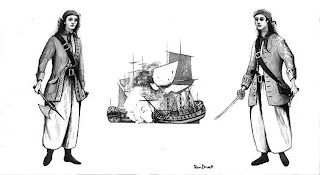
Women were known to have been warrior sea captains 2,500 years ago. Women pirates plagued the Thames, women dressed as men to join the Navy, and just like Georgiana Leonard mentioned above, it was not so uncommon to find women disguised as men working on American whaling ships………
More to follow in February – (Pepuere).
Hei konÄ mai Goodbye for now
The team at Butler Point | |||||||||||||||||||||
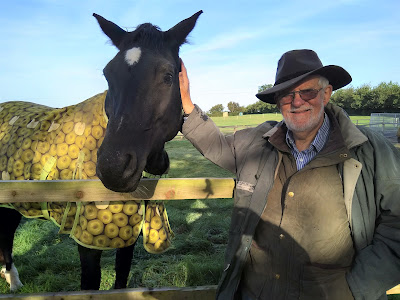
Prolific writer of historical novels set at sea, Antoine Vanner (pictured with a friend above), kindly agreed to allow me to feature his famous tips to writers as a guest post. All of them are well worth considering and following.
“My
five tips for writing historical fiction”
Sometimes (well, quite often) Amazon makes me furious.
Island of the Lost has been a bestseller in various categories since the first publication in 2007.
It has 2919 ratings. With an average of 4.5 stars.
So why would the site put a savagely critical review in the "top review" rating?
This is how it reads:
Customer Review
I have read several of these 19th century adventure books, like Ernest Shackelton's polar voyage and George De Long's experience on the USS Jeanette wreck. This ranks right up there among the best of these.
It contrasts the experience of two sets of castaways on the same deserted island in the Southern Ocean south of Australia. The island is forbidding in the extreme with terrible year-round weather, high craggy cliffs, low wind-twisted trees and scrub brush, and a pestilence of biting black flies and blue-bottle flies.
The first set of shipwreck survivors provides the Shackelton example of both moral and physical leadership leading to a 100% survival rate for all the castaways of the Grafton. The second set of castaways resembles the "Lord of the Flies". The second set of castaways from the Invercauld has about a 10% survival rate and experience a wide range of the worst in human behavior.
My impression is that both sets of castaways carried this great and horrible experience with them for the rest of their lives. The Grafton castaways learns timeless lessons about leadership and courage, while the Invercauld crew learns fear and loathing and recrimination that likely haunted them for the rest of their lives.