Search This Blog

Wednesday, September 12, 2018

Wellington rated Top Spot by Lonely Planet


Tuesday, September 11, 2018

5000-year-old medical practice

It may be yet another anniversary ....

Science Magazine reports that investigation of a Copper-Age corpse (the "Iceman") may reveal surprisingly sophisticated antique medical methods.


Ötzi, the 5300-year-old “Iceman” discovered frozen in the Italian Alps in 1991, was a medical mess. His teeth were rotting, he had a bad stomach bug, and his knees were beginning to degenerate—not to mention the arrow in his back that probably killed him. Now, a new study concludes the herbs and tattoos he seems to have used to treat his ailments may have been common around this time, suggesting a sophisticated culture of health care at this point in human history.
Previous studies have found that Ötzi carried a number of suspected medicines either on him or in him. Fastened to leather bands in his equipment, researchers found the birch polypore fungus, which the Iceman may have used to calm inflammation or as an antibiotic. Scientists also found bracken fern in his stomach, which can be used to treat intestinal parasites such as tapeworm. And Ötzi was covered with 61 tattoos (such as the one on his back, pictured above) including dotlike points around joints, which some researchers believe may have been used as pain treatment akin to an early form of acupuncture.
In the new study, scientists took a closer look at Ötzi’s tattoos. Some lines and dots were directly over his wrist and ankles which suffered from degenerative diseases, and many correspond to traditional acupuncture points, they report in the International Journal of Paleopathology. The markings would have taken a long time to produce, and this sophisticated practice—along with the variety of herbs and medicines—would have likely been developed through a dedicated, systematic trial-and-error approach that was passed down through generations in the society in which Ötzi lived, the team concludes.


Monday, September 10, 2018

Maritime anniversary #3


Next year, give or take a few centuries, will be the four-thousandth anniversary of the kick start of the great Polynesian conquest of the Pacific.

The remote ancestors of the natives of Tahiti, the Marquesas, Hawaii, Tonga, Samoa, and New Zealand were skilled sailors who burst into the western Pacific from the archipelago of southeast Asia about 1400 BC, to settle in the islands of Fiji.  About a thousand years before Christ was born, they colonized Tonga and Samoa, where Polynesian language and culture developed.  Fifteen hundred years passed by, and then, perhaps because of overcrowding, perhaps because of the pressure of war, or perhaps just for the excitement of adventure, men and women sailed out from this ancestral cradle, fanning out across the broad Pacific, and exploring more of the earth’s surface than anyone ever before. 

It was a feat made possible by the evolution of the double-hulled canoe into a stable voyaging vessel, capable of freighting a heavy load of plants, animals, provisions, and people.  The big, graceful craft ranged as far east as Rapanui (Easter Island), and are very likely to have made a landfall in South America, either introducing the kumara (sweet potato), or carrying kumara sprouts back to Polynesia.  At a time when sailors in the Mediterranean were just starting to experiment with the fore-and-aft sail, Polynesian canoes powered by lateens made the tough 2,500-mile voyage to Hawaii, and then back again, battling cross-currents, the doldrums, and contrary trade winds.  Two hundred years before the era of Columbus, Magellan, and Drake, Polynesians crossed two thousand miles of storm-tossed ocean, reaching far south to find the mountainous, deeply embayed islands of New Zealand.


This enormous accomplishment makes the celebrations of the circumnavigations of Cook, Magellan et al seem a little silly, does it not?  But never mind, any kind of anniversary makes a good excuse for a party.


Another anniversary (of sorts) is Tupaia, my biography of the great priest-navigator from Raiatea  -- TUPAIA, who enabled the success of Captain Cook's circumnavigation of New Zealand in 1769.

Today, as well as being the seventh anniversary of the first printing of this highly successful book,  is the launch of the FIRST ILLUSTRATED DIGITAL EDITION, published by Old Salt Press.

Buy it at all internet bookstores, including Amazon.


New Zealand's leader featured in today's NYT


"Socialist Cindy" unlike Trump
Is progressive on the stump,
And her Land needs no protection
From a careless misdirection.

Gave birth as Prime Minister

Trump views this as sinister
Women seated at the helm?
His wee mind doth overwhelm.

Where’s that “better Health Care bill”?

So far he’s given us nil,
While New Zealand’s great PM
Boasts of full care, not pro tem.

Well, well, believe it or not, our "Lady of the Rings" is featured in a Dowd oped in today's New York Times. And compared very favorably with you-know-who, what's more.
The reader comments are worth reading, though I take issue with the one that complains about our "bad" coffee. (This, about the country that invented the flat white?!!) I republish a gem above.
And, herewith, a preview of the article itself ...


At first, the skies were cloudless in the Land of the Long White Cloud.
When she took office last October at 37, Jacinda Ardern was celebrated with sunny abandon as New Zealand’s youngest prime minister in 150 years and only the second world leader (after Benazir Bhutto in 1990) to give birth and the first to take maternity leave. (Six weeks.) Vogue ran a piece christening Ardern the “Anti-Trump,” with a picture of the prime minister in a cream trench coat on a craggy beach that was so dramatic and glamorous that some on the internet mistook it for a publicity still for a TV detective show. She is part of the club of young, progressive leaders, along with Justin Trudeau and Emmanuel Macron, trying to counter President Trump’s ugly impulses against the environment and multilateralism. In a sartorial triumph, Ardern wore a feathered Maori cloak to meet Queen Elizabeth at a black-tie dinner in London.
“It was highly coveted among the princesses at the dinner,” Ardern’s partner, Clarke Gayford, told me. “They made a beeline for her, and I’m surprised she managed to leave wearing it, to be completely honest.”
As “Jacindamania” swept the globe, Ardern was hailed as an exciting avatar of women’s future in politics. In the United States, where a stampede of women — including young mothers — is seeking office in 2018, it seemed almost a preview of what could be possible, albeit one with much better scenery.


Next year's anniversaries (2)


From marcaespana

Spain has begun to celebrate the 500th anniversary of the first circumnavigation of the Earth, accomplished by Portuguese explorer Ferdinand Magellan and Spanish discoverer Juan Sebastián Elcano. The celebrations will go on until 2022, in an effort to promote an exploit that can be deemed the first act of globalisation in history.

The inaugural event -- held on board the training ship Juan Sebastián de Elcano -- was attended by King Felipe VI and his father Juan Carlos, who visited the Spanish Royal Navy’s training ship Juan Sebastián de Elcano. It was the first time two kings had got aboard this barquentine together.


The event was the farewell to the 180-strong crew before they embarked on their training cruise, which will take them to Brazil, Uruguay, Argentina, Chile, Peru, Panama and USA aboard the Juan Sebastián de Elcano, a floating embassy of our country.

Celebrations for three years

The 500th anniversary of the first circumnavigation of the Earth will be celebrated in the context of Seville 2019-2022, a three-year programme of activities mirroring the three years the Magella-Elcano voyage took to complete (from 1519 to 1522). The programme is meant to tell the story of the expedition in Spain and the world, drawing attention to its importance and to the explorers behind the big deed.

One of the main activities has already been held: the largest history conference ever, gathering 250 scholars from all over the world (Valladolid, 20 to 22 March).
In addition, on 22 March, an event was held commemorating the signing of the Capitulaciones, that is, the contract signed by the Spanish Crown and Magellan before his ships set sail. The ceremony was chaired by King Felipe VI.


The voyage that changed the world
In 1519, 500 years ago, King Charles I of Spain appointed the naval officer Ferdinand Magellan to search for a westward route to the Maluku Islands, known at the time as the ‘Spice Islands’, explore the adjacent territory, and see the possibility of the islands being Spanish according to the demarcation of the Treaty of Tordesillas.
In order to evade the Portuguese fleet, Magellan departed from Seville and sailed south and west. On 6 September 1522, Elcano and the remaining crew of Magellan’s expedition arrived in Spain aboard the Victoria, completing the first known voyage around the entire Earth, almost exactly three years after the fleet of five ships had departed.
The Magellan-Elcano expedition literally changed the world and our knowledge of it, proving that the Earth was actually a sphere, finding a passage that connected the Atlantic and the Pacific Oceans (today known as Strait of Magellan) and discovering new territories like the Philippines.


There is also the strange case of Enrique de Malacca, a Malay slave Magellan acquired in Malacca in 1511 whom he christened “Enrique” and brought back to Spain. Enrique also joined the Magellan Expedition to the Philippines and some historians aver that it was he who actually carried out the first circumnavigation.


Saturday, September 8, 2018

Wrecked whaleship found in remote Arctic


From Newswire CA


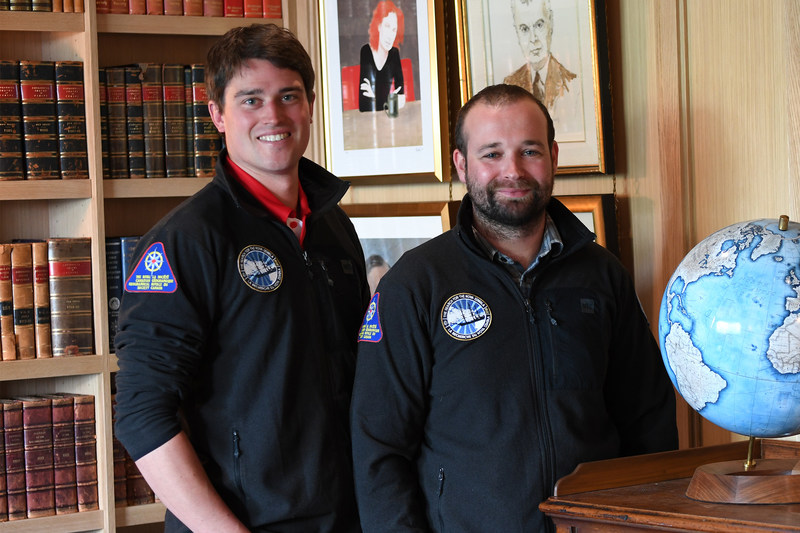
OTTAWA, Sept. 6, 2018 /CNW/ - Two Canadian researchers have found evidence of a Scottish whaling wreck in the High Arctic, thought to be the first discovery of its kind in the world. Michael Moloney and Mathew Ayre, post-doctoral fellows with the University of Calgary's Arctic Institute of North America, made the find last week. The wreckage is from Nova Zembla, a whaling vessel that sank in a fjord near Baffin Bay in September 1902. The discovery is significant because the British fleet lost over 200 vessels and none have ever been found until now.
"Most Canadians are not aware of the important role that whaling played in opening up the Canadian Arctic," says Ayre. "These sailors formed strong partnerships with the Inuit to learn how to navigate Arctic waters for close to 300 years." The knowledge gained from each whaling trip became extremely helpful to subsequent voyages of the Britain's Royal Navy in their quest to explore the planet's polar regions and discover the Northwest Passage.
"This is a previously unidentified archaeological site, and the first High Arctic whaling ship ever discovered," says John Geiger, Chief Executive Officer of the Royal Canadian Geographical Society. "It is a remarkable story of historical sleuthing supported by fieldwork and adds considerably to the historical record by shedding new light on that treacherous, once great industry."
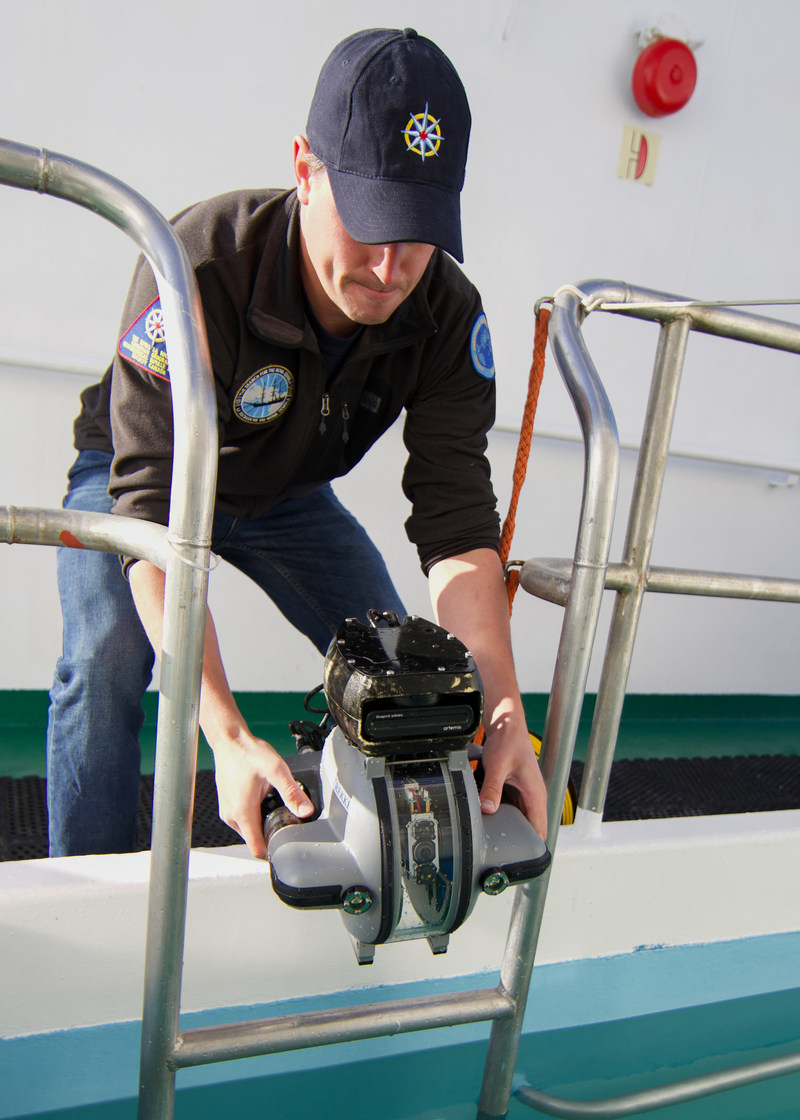
The team that made the discovery relied on drone footage and sonar imaging. Working off One Ocean Expedition's Akademik Sergey Vavilov ship, they deployed a remote-operated underwater vehicle in a targeted five-square-kilometre search area, which they had narrowed in on through months of research. The pair still needs to further study the sonar imagery to examine some promising shapes, including what appears to be one of the anchors of the ship — straight lines and right angles are indicative of man-made materials. Moloney and Ayer plan on resuming their research next year and will work with local Inuit communities to learn more about the history of Nova Zembla.
"Grassroots underwater archeology on a budget takes time," says Moloney. "This will be a multi-year project that helps Canadians learn more about our maritime history."

From Deeptrekker
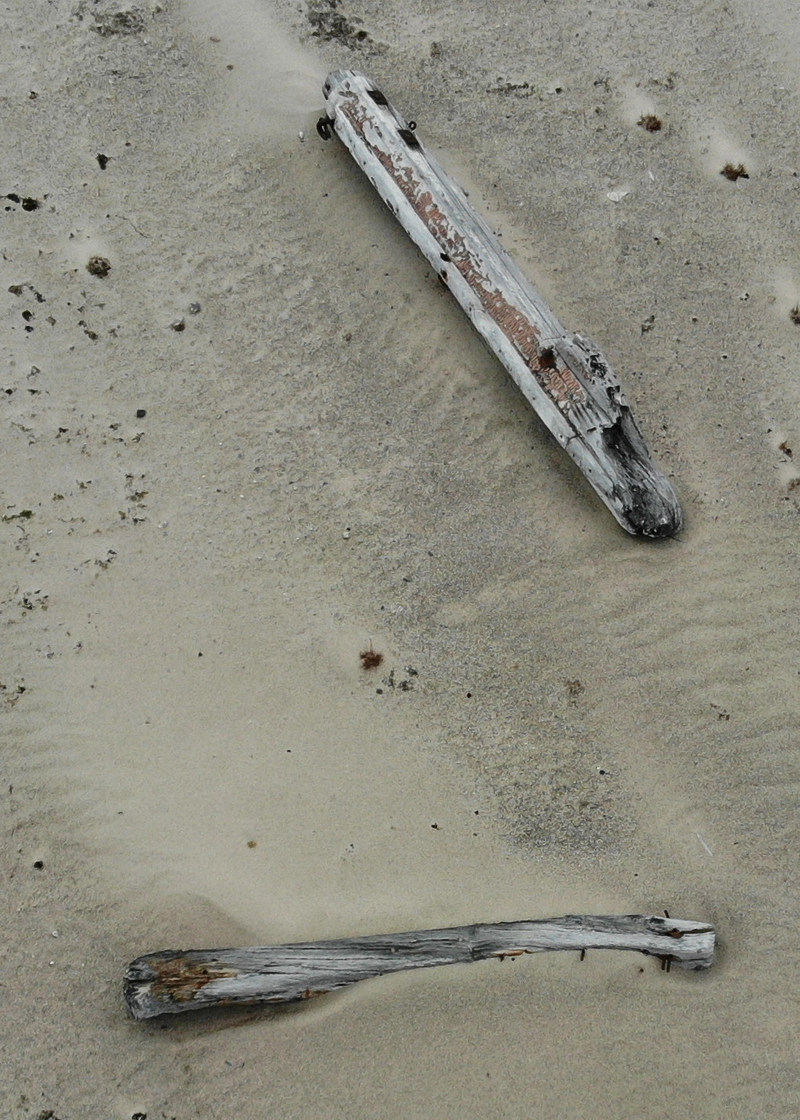
The Scottish whaling vessel Nova Zembla wrecked in a fjord off Baffin Bay on Thursday, September 18th, 1902. The crew was rescued by fellow whalers, the Diana and Eclipse.
Alongside newspaper testimonies from the crew on their return, these first-hand accounts place the wreck in a harbour on the east coast of Baffin Island, in shallow water and protected from the destructive effects of turbulent sea ice conditions. Nova Zembla struck a reef while running for cover in a storm. It sank fast and the crew had little time to abandon ship. The valuable whalebone was rescued from its stores and transferred to the Diana, who revisited the wreck the following year and salvaged its rudder.
SOURCE Royal Canadian Geographical Society
With thanks to Dave Shirlaw

Friday, September 7, 2018

Next year's anniversaries (1)

From the British Royal Academy

Marking 250 years since Cook’s first voyage to the Pacific, we
celebrate the dazzling and diverse art of the region of Oceania, from
the historic to the contemporary.

https://www.royalacademy.org.uk/exhibition/oceania

The year is 1768, and Britain is in the throes of the Age of
Enlightenment. As a group of artists agrees to found the Royal
Academy, Captain James Cook sets sail on a voyage of discovery to
track the transit of Venus and search for terra australis incognita –
the unknown southern continent, as Europeans called it. What Cook and
his crew encounter on arrival is a vast number of island civilisations
covering almost a third of the world’s surface: from Tahiti in
Polynesia, to the scattered archipelagos and islands of Melanesia and
Micronesia.

The indigenous populations they met came with their own histories of
inter-island trade, ocean navigation, and social and artistic
traditions. This spectacular exhibition will reveal these narratives –
celebrating the original, raw and powerful art that in time would
resonate across the European artistic sphere.

Oceania will bring together around 200 exceptional works from public
and private collections worldwide, and will span over 500 years. From
shell, greenstone and ceramic ornaments, to huge canoes and stunning
god images, we explore important themes of voyaging, place making and
encounter. The exhibition draws from rich historic ethnographic
collections dating from the 18th century to the present, and includes
seminal works produced by contemporary artists exploring history,
identity and climate change.

29 September — 10 December 2018
Daily 10am – 6pm
Friday 10am – 10pm

Main Galleries, Burlington House, Royal Academy of Arts

£20 (without donation £18). Concessions available. Under-16s free with
a fee-paying adult. Free for Friends of the RA, no booking required.
Free for all New Zealand, Tonga and Papua New Guinea passport holders
(show passport at exhibition entrance).

Thursday, September 6, 2018

Wellington, fashion capital


You have arrived in Wellington on a cruise ship, and are desperate for something new and glamorous to wear on formal nights?  Wellington offers splendid opportunities for that, as not only is it the coolest little capital in the world, but it is a Mecca for fashion, too.

New Zealand boasts world-famous designers, names such as Trelise Cooper, Karen Walker, and Paula Ryan, and there are super little stores here, stocking the latest from their collections.

You can find a list of some of the stores here.   And the good news is that they are all within a short walking distance of the shuttle bus drop-off.

A personal favorite is darling in Featherstone Street, owned and managed by the lively and dedicated Janet Paape, and a stockist of my favorite designer, Paula Ryan, and the Canadian powerhouse designer, Joseph Ribkoff.

In fact, I was in there yesterday, at Janet's Spring opening, which inappropriately enough was staged in the middle of a cold southerly storm, but was warm and welcoming.  And not only did I buy a gorgeous Ribkoff dress (I hasten to say I am not the model), but Janet gave me a copy of Paula Ryan's glossy magazine, Simply You, which celebrates 20 years of creating style.


And in the magazine I found "Paula's twenty style rules," which had me nodding so emphatically that I could not resist paraphrasing the tips for you.

1. The older you get, the less foundation you should wear.

2. Don't be obsessed with the way you look.  If you are too stiff and self-conscious you will look like a dressed-up Barbie doll.

3. If your arms have got saggy, go sleeveless only in the tropics.

4. Your cheekbones and shoulders never age.  Don't be too shy to emphasize them.

5. Tidy fingers and toes are a must.  Otherwise, wear gloves and socks.

6. Never do heavy eyes AND heavy lips.  Emphasize one or the other.

7. When you sit, turn your legs to one side.  Side-saddle, not cross-saddle.

8. Be aware of trends, even if you don't like them.

9. Be realistic about your body.  No one is perfect.

10. Dress like a triangle.  Skinny skirt or pants need a boxy top, and a full skirt demands a figure-hugging bodice or top.

11. Your style should be effortless.  That last survey in the mirror before you go out should be your last.  Just forget what you are wearing, and enjoy.

12. Invest in clothes that don't date.  Expensive but timeless is the goal.

13. Women need three handbags -- one for shopping and boarding a plane, one that crosses the body, and a little one for the evenings.

14. Have a good wardrobe, but a small wardrobe.  Buying clothes that you seldom wear is a waste of money and space.

15.  If you are short, wear a single color.  And teetering in high heels simply makes you look shorter.  Keep to flats or low heels.

16. Spoil yourself just once every season, and then wear your purchase as often as you can.

17. Don't go shopping with a friend.  Because she likes you, she is not likely to say when you look awful.

18.  If you can't run or dance in your new shoes, the heels are too high.

19. Make sure you are in a very good mood when you buy a swimsuit, as you are bound to be unhappy with what you see in the mirror,  And definitely not with a hangover, when everything is puffy.

20. Hang on to your sense of humor.  It can make buying that daring bit of costume jewelry even more fun. 

Tuesday, September 4, 2018

Walking Wellington


You could explore Wellington on your own.  Crowded in by the sea, the coolest little capital in the world is perfectly possible to explore on your feet, led by the next attraction in sight.

Or, for just $20, you can have a knowledgeable guide, who will not only take you on a tour of the best accessible sights, but will inform you about the history of each and every hidden gem, and entertain you at the same time, but  many only moderately tall stories.


To take advantage of this incredibly thrifty fun, turn up at i-SITE (by the Michael Fowler Centre, and at the end of the fascinating Cuba Quarter) at 9:50 am, or schedule your own trip by booking online at www.walkwellington.org.nz or by emailing information@walkwellington.org.nz

It's a non-profit enterprise.

Sunday, September 2, 2018

Wellington's famous Cable Car


The cable car is deservedly one of Wellington's prime attractions.

For a start, it is historic.  When I was a student at Victoria University, a million years ago, it was the best way to get from Lambton Quay at the bottom of the hill to the university, which was just one stop from the top of the hill.  In those days (and you can try out an old car at the Cable Car Museum at the top) it was possible to perch on the outside.  It was even possible to chalk one's name on the side of the tunnel during one of the two tunnel stops -- if your name was very short!  Not particularly safe or even legal, but students were students, even back then.  Nowadays, the cars are completely enclosed, and can accommodate prams, wheelchairs, walking frames, and mobility scooters.  On non-cruise ship days they even take bikes.

Secondly, it offers amazing views.  And thirdly, it is fun.  And the tunnels, now lit with fairy lights, are so pretty.


It also offers quick access to sites other than the university -- the aforesaid Cable Car Museum (free entry), the Botanic Gardens (free), Space Place, and Zealandia (free shuttle).  Tips for all of these will be given in later posts.


The cars hold rather a lot of people -- more than sixty, with some standing -- and run every ten minutes.  Normally -- and I repeat, NORMALLY -- that is, not on cruise ship days, there is just a short queue at the ticket office, and the wait for the car is equally short.  On cruise ship days, it is different.  The queue for the Ticket Office trails down Cable Car lane, and it can take 20 or  even 30 minutes to get there.  And then you can pay only in New Zealand, Australian, or United States cash, though Visa, Mastercard, and China Union are accepted.

This tends to add to the wait time.

However, the queue can be jumped rather easily.  One way is to buy your tickets online.   Or you can buy a Snapper card, which gives you prepaid travel on buses as well as the Cable Car -- but you must make sure that the card is loaded with enough money.

Another is to take a tour. There are at least three that offer the chance to ride the Cable Car as well as take in other sights.

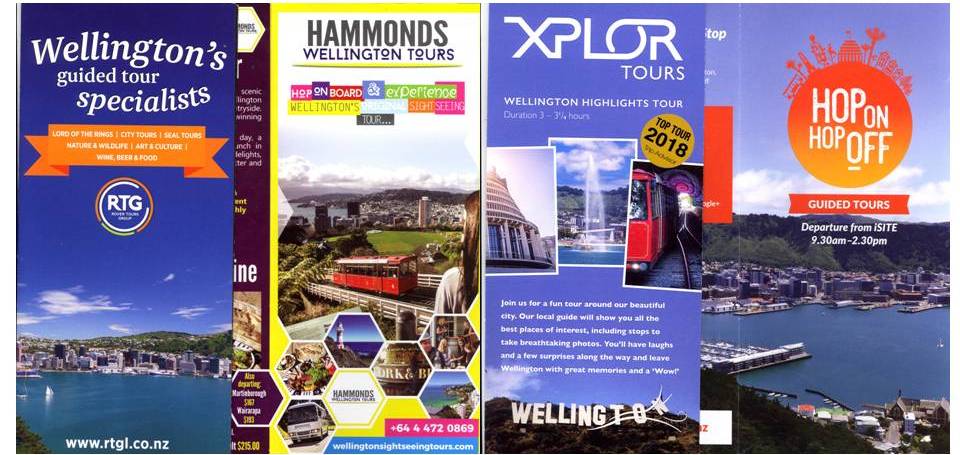
Hammond's Wellington City Sights & Coastline Tour will take you to the top of the Cable Car, and pick you up at the bottom. 

Xplor tours will drop you at  the bottom, and pick you up at the top.

And the Rover Group's Hop on Hop off tour lets you make up your own mind.

All of these tours can be booked over the internet, making your Wellington cruise ship day a breeze.

Much more about these wonderful tour groups later.